Things to Do in Vietnam: Ninh Binh, Da Nang, Sapa, Phu Quoc and Nha Trang
Beyond the four big names, five destinations carry the landscape half of a Vietnam trip — and two of them are the reason people come back.
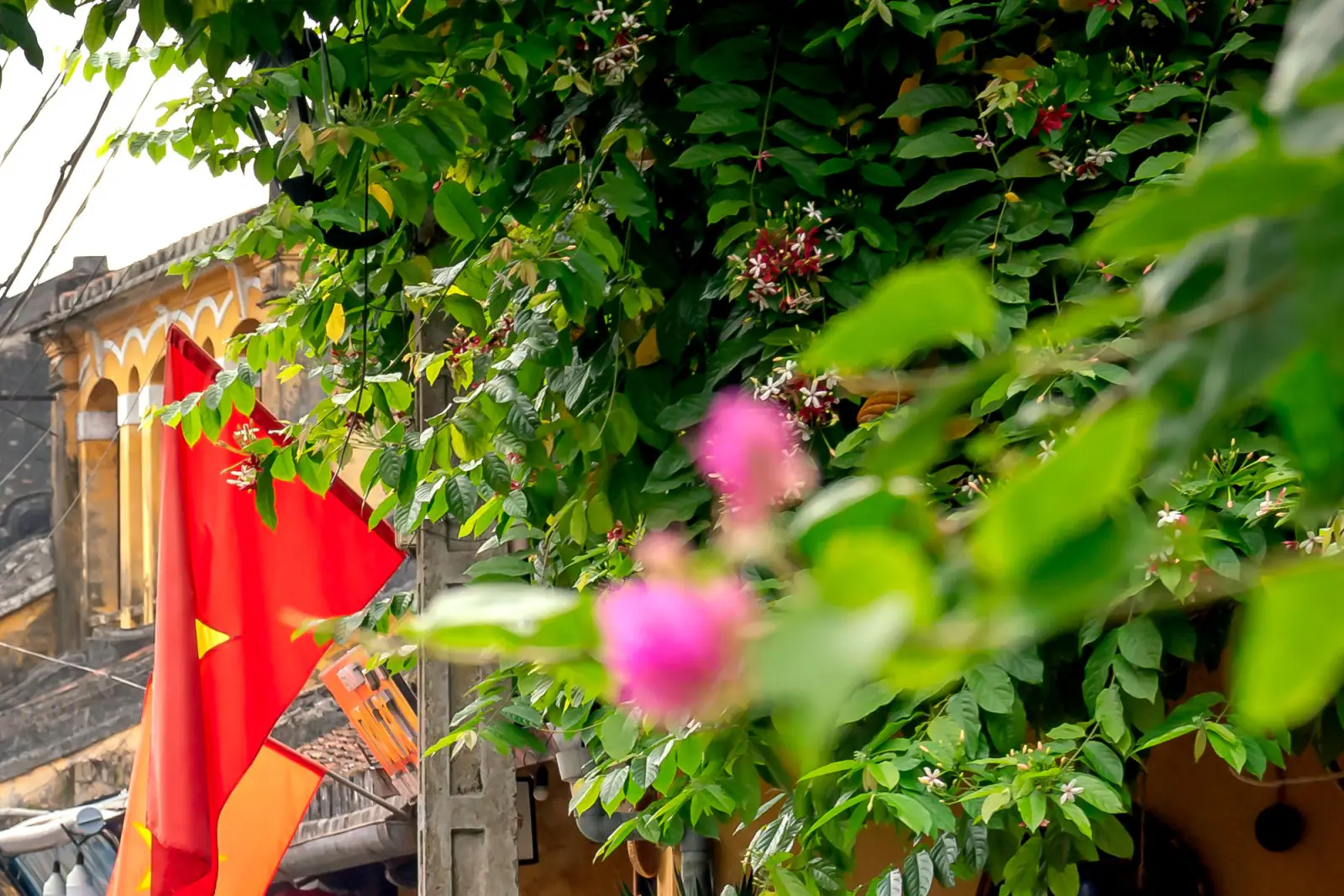
The cities in part one give a Vietnam trip its history and its street life. These five give it its landscape: limestone valleys you cross by rowboat, rice terraces cut into mountainsides, and three very different stretches of coast.
Ninh Binh — Ha Long on land
Limestone towers rise straight out of flat farmland, and you travel between them by boat, through the rice paddies. Hoa Lu was the capital in the tenth and eleventh centuries and its remains sit inside the same protected area, which is how a one-day stop turns into two.
- Trang An — UNESCO-listed karst landscape, three separate boat routes through the caves.
- Tam Coc — the boat route along the Ngo Dong river, through the rice fields.
- Mua Cave — five hundred steps to a panorama over the Tam Coc valley.
- Bich Dong Pagoda — a temple carved into rock across three levels.
- Hoa Lu — the tenth-century capital, with two royal temples.
- Bai Dinh Pagoda — the country's largest temple complex, with its long arhat corridor.
- Cuc Phuong National Park — Vietnam's first national park, with a primate rescue centre inside.
- Van Long nature reserve — a quiet, uncrowded boat tour across reed wetland.
- Thung Nham bird garden — where the evening return of the birds can be watched.
- Am Tien cave and lake — an enclosed lake ringed by cliffs, with a small temple.
- Phat Diem Cathedral — stone, and built in Vietnamese and European architecture at once.
- Hang Mua lotus pond — in flower through the summer.
- Van Lam village — flat, short bicycle routes between the fields.
Where to stay: Tam Coc for the pier, restaurants and bike rental on foot; around Trang An for homestays and bungalows at the base of the cliffs; Ninh Binh city for the train station and intercity buses; Van Lam village for quiet homestays among the fields.
Sapa — the terraced fields
A town in the northern mountains, surrounded by villages belonging to several different ethnic groups, in valleys covered by terraced rice fields. Fansipan, the country's highest peak, is reached from here.
- Muong Hoa Valley — the most extensive terraces in the region.
- Fansipan — the highest peak in Vietnam, by cable car or on foot.
- Cat Cat Village — the closest Hmong village to town, and its waterfall.
- Ta Van — a Giay village in the valley, dense with homestays.
- Lao Chai — the first stop on the walking route through the fields.
- Ta Phin — a Red Dao village, known for its herbal baths.
- Sapa Stone Church — French colonial, on the town square.
- Ham Rong Mountain — gardens above the town and a panoramic viewpoint.
- Sapa Market — where the surrounding villages bring their produce.
- Bac Ha Market — the region's most colourful village market, on Sundays.
- Silver Waterfall — tall, and right beside the road west of town.
- Tram Ton Pass — the highest mountain pass in the country.
- Y Linh Ho — a village on steep slopes, on the trekking route.
Where to stay: Sapa town for buses, restaurants and tour offices; Ta Van and the Muong Hoa valley for homestays in the fields; the Cat Cat road for hotels overlooking the valley within walking distance of town; Lao Chai if you want to start the trek from your door.
Da Nang — the dragon bridge city
Built behind thirty kilometres of beach, Da Nang is the country's most orderly large city and the air gateway for the centre. Departures for Hoi An, My Son and Hue all start here.
- My Khe Beach — wide, flat sand running the length of the city.
- Dragon Bridge — fire and water shows on weekend evenings.
- Ba Na Hills and the Golden Bridge — the bridge carried by giant hands, up the cable car.
- Marble Mountains — cave temples and a stone-carving village.
- Son Tra Peninsula — the Lady Buddha statue and the coastal road.
- Linh Ung Pagoda — the large white statue over the sea at Son Tra.
- Cham Sculpture Museum — the most complete collection of Cham stone work anywhere.
- The Han River bank — the evening walk, with the bridges lit.
- Han Market — the covered market in the centre.
- Hai Van Pass — the coastal mountain road north, and the historic gate at the top.
- Non Nuoc Beach — the quiet one, on the Marble Mountains side.
- Asia Park — Ferris wheel and amusement area on the riverbank.
- Con Market — the city's largest local market, and its densest street food.
Where to stay: the My Khe beach line for front-row hotels and the evening promenade; the west bank of the Han for the market and restaurants on foot; An Thuong for cafés and small hotels near the beach; the foot of Son Tra for a quiet stretch of coast.
Nha Trang — six kilometres of beach
The city sits behind a six-kilometre flat beach along the bay, and the day-trip boats to the islands leave from here. The Cham-period Po Nagar towers and the mineral mud baths are inside the city itself.
- Tran Phu Beach — the six-kilometre strand along the city.
- Po Nagar Cham Towers — brick temple towers from the seventh century.
- Long Son Pagoda — the white Buddha seated on the hill above the city.
- Nha Trang Cathedral — gothic-inspired, in stone, on its own hill.
- Hon Mun — a marine protected area, and the snorkelling and diving spot.
- Hon Tam — a bay island with beach facilities and a mud bath.
- Hon Tre — the island resort complex, reached by cable car over the sea.
- Thap Ba mud baths — mineral hot pools on the edge of the city.
- Dam Market — fish, spices and street food under one roof.
- Hon Chong cape — the sunset viewpoint on the rocks.
- Ba Ho waterfalls — a three-tiered trail with pools, north of the city.
- Doc Let beach — white sand and shallow water, further north.
- Yang Bay eco park — waterfalls and hot springs in the hills.
- Alexandre Yersin Museum — the house and laboratory of the researcher who lived here.
Where to stay: the Tran Phu beach line for front-row hotels; Loc Tho for restaurants and tour offices in the centre; Hon Chong for the rocky, quieter north; Vinh Hoa for the newer hotels up the coast.
Phu Quoc — the island
The largest island in the country: white-sand coves in the south, forest in the north, pepper plantations in between. It is closer to the Cambodian coast than to mainland Vietnam, and at roughly fifty kilometres end to end it is bigger than people expect.
- Sao Beach — a white, shallow bay on the southeast side.
- Long Beach — the long west-coast strand that faces the sunset.
- Ong Lang — the quieter coastline north of Long Beach.
- Hon Thom Cable Car — one of the world's longest lines, crossing open sea.
- An Thoi Archipelago — the small southern islands and the snorkelling.
- Phu Quoc National Park — the forest reserve covering the north.
- Ganh Dau — the cape, bay and fishing village at the northwest tip.
- Suoi Tranh Waterfall — a short walk in the middle of the island.
- The black pepper plantations — the island's famous crop, open to visitors.
- The fish sauce workshops — where traditional nước mắm is made.
- Dinh Cau Temple — a small temple on the rocks at the edge of town.
- Duong Dong night market — seafood and street food stalls.
- Ham Ninh fishing village — the traditional village and pier on the east shore.
- Sunset Town — the pier, bridge and evening show area at the southern tip.
Where to stay: Long Beach and Duong Dong for the beach, night market and restaurants on foot; Ong Lang for a quiet coast a short drive from the centre; An Thoi and the southern tip for the cable car and the island tour dock; Cua Can for the settled, quiet northwest.
Weather decides which of these five works in your month — the month-by-month guide scores all nine destinations. For what it all costs, see the budget breakdown.
Visa, best season, a suggested route, costs and flight prices for Vietnam — in one report, for your own passport.
Keep reading
 Vietnam
What a trip to Vietnam costs, and the apps to install
$23, $60 or $190 a day, itemised — and the 14 apps worth installing before you fly.
 Vietnam
 travel tips: money, SIM, scams and the rules
Money, SIM, food, the licence rule, eight scams and the laws with real penalties.