Things to Do in Vietnam: Hanoi, Saigon, Ha Long and Hoi An
Four destinations carry most Vietnam itineraries. Here is what to see in each, how long to stay, and the mistake people make in every one of them.
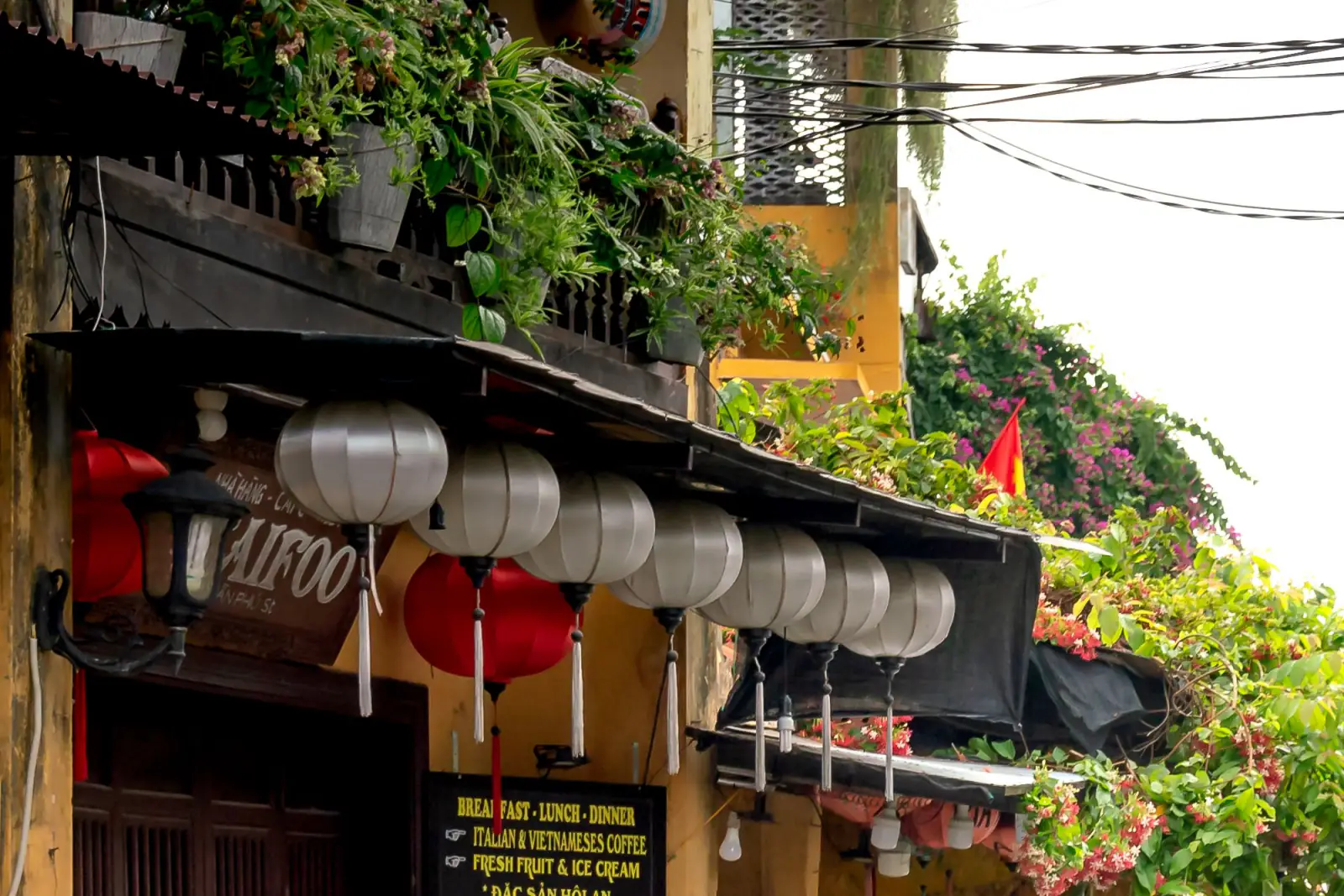
Vietnam has more destinations than a first trip can hold, but four of them do most of the work: the capital, the bay, the lantern town and the southern megacity. Together they cover the country's history, its landscape and its two very different urban moods.
Each section below gives the places worth your time, how long the city actually needs, and where to stay. The remaining five destinations are covered in the second part.
Hanoi — the thousand-year capital
Every street in the Old Quarter is dedicated to a craft, and that arrangement has held for centuries. French colonial boulevards, lakeside districts and street restaurants are all packed into a few kilometres, which is why Hanoi rewards walking more than any other Vietnamese city.
What to see
- Hoan Kiem Lake — the lake at the centre, with its red bridge and the Ngoc Son temple.
- The Old Quarter — a market fabric of thirty-six streets, each named for the trade that worked it.
- Temple of Literature — the country's first university, from the eleventh century, laid out as a series of courtyards.
- Ho Chi Minh Mausoleum and the museum around it, on Ba Dinh square.
- One Pillar Pagoda — a small temple built on a single pillar in the middle of a pond.
- Thang Long Citadel — the imperial citadel remains, on the UNESCO list.
- Train Street — a narrow railway line running between houses and cafés.
- Dong Xuan Market — the large covered market north of the Old Quarter.
- Water Puppet Theatre — the traditional puppet show performed on water.
- West Lake (Tay Ho) and its café row — the city's largest lake.
- Tran Quoc Pagoda — the oldest pagoda in the city, on the West Lake shore.
- Hoa Lo — a museum in a former prison building.
- Women's Museum — on ethnic groups and women's life in the country.
- Museum of Ethnology — fifty-four ethnic group houses recreated outdoors.
Where to stay
The Old Quarter puts the market, the lake and the street food within walking distance. South of Hoan Kiem, the French Quarter has the wide avenues, the opera house and the larger hotels. Ba Dinh is quieter, around the museums and monuments, and Tay Ho suits longer stays, with lakeside cafés and apartments.
Ha Long — the bay, not the town
Nearly two thousand limestone islands rise steeply out of the sea here, and boat tours of one or two nights run between them. The town itself is a transit point: the experience happens on the water, which is why Ha Long needs one or two days rather than three.
What to see
- Ha Long Bay — the UNESCO-listed main bay of limestone islands.
- Bai Tu Long Bay — the neighbouring bay to the northeast, with fewer boats.
- Lan Ha Bay — the southern section on the Cat Ba side, with sandy beaches.
- Sung Sot Cave — the largest cave open to visitors in the bay.
- Thien Cung Cave — a stalactite cave known for its lit chambers.
- Ti Top Island — a hill reached by stairs, and a small beach.
- Cat Ba Island — the largest island in the bay, with a national park and a town.
- Cat Ba National Park — forest trails and an observation hill.
- Viet Hai village — a farming village inside Cat Ba, reached by boat.
- The floating fishing villages — settlements of posts and buoys in the bay.
- Luon Cave — an enclosed, lake-like cove crossed by rowboat.
- Ha Long Cable Car — a double-deck line across the bay, with a Ferris wheel at the top.
- Quang Ninh Museum — regional history, in a black glass building.
Where to stay
The honest answer is on the boat — a cabin for one or two nights is the main format. On land, Bai Chay is the hotel strip nearest the pier, Cat Ba town suits people who want daily boat trips into Lan Ha, and Tuan Chau is the marina island closest to the departure dock.
Hoi An — the lantern town
A trading port from the fifteenth to the nineteenth century, Hoi An came out of the war unscathed and is on the UNESCO list. Japanese, Chinese and Vietnamese architecture stand side by side on the same street — and the town is small enough to cross on foot in twenty minutes.
What to see
- The Old Town — the UNESCO-listed trading centre with its yellow facades.
- Japanese Covered Bridge — sixteenth century, with a temple built on it.
- Tan Ky House — a two-hundred-year-old merchant house with an open courtyard.
- Phuc Kien Assembly Hall — the ornate temple courtyard of the Chinese immigrant community.
- The Thu Bon riverbank — where the evening lantern sellers and the boats gather.
- Central Market — spice, fish and local food stalls.
- An Bang beach — the quiet one, reachable by bicycle.
- Cua Dai beach — the closest beach to town.
- Tra Que vegetable village — organic farms and cooking workshops.
- Cam Thanh coconut forest — water canals explored by basket boat.
- My Son — Cham-period temple ruins southwest of town.
- The tailor workshops — the town's known craft, cut to measurement.
- Lantern-making workshops — where silk lantern production can be watched and tried.
- The night market — lanterns and street food on the opposite bank.
Where to stay
Around the Old Town for pedestrian streets and everything on foot; An Bang for the beach, a short cycle from the centre; Cam Nam island across the river for local character and lower prices; the Cua Dai road for the hotel and resort strip between town and sea.
Ho Chi Minh City — Saigon
The country's largest and fastest city. Colonial buildings, towers and street food are woven together in District 1, and both the Mekong Delta and the Cu Chi tunnels are within day-trip distance — which is what pushes a two-day stop toward four.
What to see
- Ben Thanh Market — the city's emblem, with the night stalls around it.
- Central Post Office — a working post office with an iron roof from the Eiffel period.
- Notre-Dame Basilica — the red brick cathedral opposite it.
- Independence Palace — interiors preserved as they were when the tanks came through in 1975.
- War Remnants Museum — photographs and documents from the war period.
- Bui Vien — the pedestrian street where the nightlife concentrates.
- Nguyen Hue boulevard — the wide pedestrian axis up to city hall.
- Bitexco Tower — city and river views from the observation deck.
- Thien Hau Pagoda — a Chinese temple in Cholon, known for its incense spirals.
- Cholon — the Chinese district, with wholesale markets and temples.
- The Café Apartments — cafés and shops filling the floors of an old residential block.
- Cu Chi Tunnels — the underground network northwest of the city.
- The Mekong Delta — canal and floating-market routes, as a day trip.
- Tan Dinh Church — the neighbourhood church with the pink facade.
Where to stay
District 1 and Ben Thanh keeps the museums, the palace and the market within walking distance. Thao Dien in District 2 is the riverside café area and suits long stays. District 3 is quieter and dense with local restaurants, and Pham Ngu Lao is the budget strip where the buses and tour offices are.
For the other five destinations — Ninh Binh, Da Nang, Sapa, Phu Quoc and Nha Trang — see part two. To decide when to go, start with the month-by-month guide.
Visa, best season, a suggested route, costs and flight prices for Vietnam — in one report, for your own passport.
Keep reading
 Vietnam
Ninh Binh, Da Nang, Sapa, Phu Quoc and Nha Trang
Sixty-seven places across the five destinations that turn a trip into a route.
 Vietnam
What a trip to Vietnam costs, and the apps to install
$23, $60 or $190 a day, itemised — and the 14 apps worth installing before you fly.