What a Thailand Trip Costs in 2026 — and the Apps to Install First
Thailand is cheap at one level and genuinely expensive at another, and the gap between them is almost eightfold. Here is what each level actually buys.
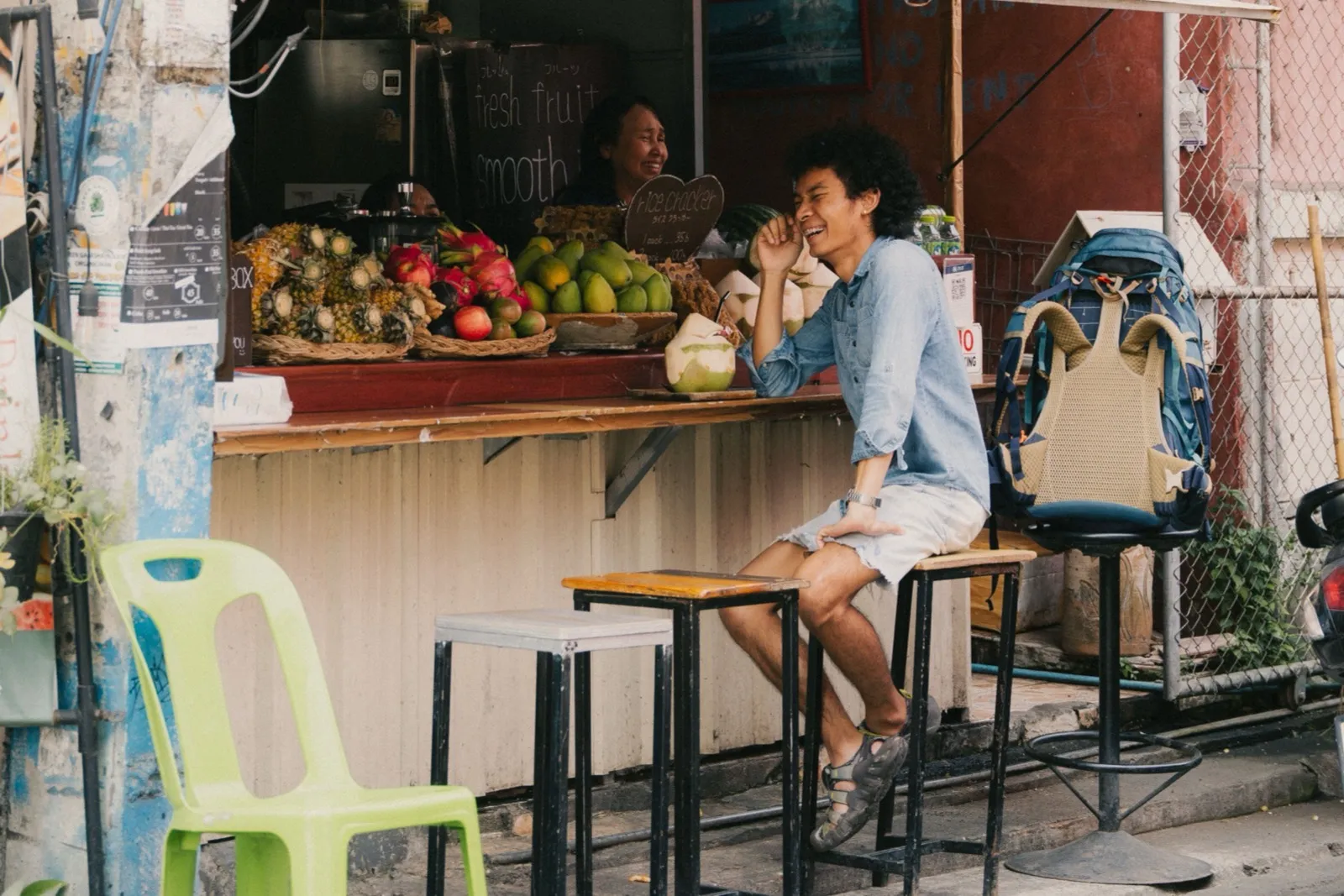
Thailand is one of the few countries where the same two weeks can cost five hundred dollars or four thousand, without either number being unusual. The difference is almost entirely the bed and the kind of restaurant you sit down in.
The three levels, per day
These are the numbers Rotaly shows inside a Thailand report. They cover a day on the ground — flights are not included.
| Per day | Budget | Mid-range | Luxury |
|---|---|---|---|
| Bed, per night | $13 | $45 | $160 |
| Cheap meal | $3 | $5 | $12 |
| Mid-range meal | $9 | $18 | $45 |
| Groceries, per day | $6 | $9 | $16 |
| Local transport | $3 | $7 | $25 |
| Daily total | $34 | $84 | $258 |
Compiled by hand in September 2026 from Bangkok prices and adjusted downward for the country as a whole, at 1 USD = 33.31 THB. They are estimates, not quotes, and the app shows them rounded — there is no false precision here.
What separates the levels
The jump from budget to mid-range is mostly the room: $13 to $45 a night, which is the difference between a fan guesthouse and an air-conditioned hotel with a pool. Food barely moves — a plate of street food costs about the same whoever orders it.
The jump from mid-range to luxury is steeper and broader. The room more than triples, but so does local transport: $7 to $25 a day, because at that level you stop taking the ferry and start taking the private transfer.
Put the three rows side by side and the difference shows where it comes from: almost all of it is the bed. Moving from budget to mid-range takes the daily total from $34 to $84, and $32 of that $50 is accommodation alone ($13 to $45). From mid-range to luxury the gap is sharper still: $115 of the $174 is again the bed. Food and local transport stay small at every level — even at the luxury tier, $45 a day of meals and $25 of transport sit well behind the room. The practical reading: if you want to cut the budget, you cut the room class, not the street food.
These figures were compiled by hand in September 2026, scaled down from Bangkok data to a country-wide average, at 1 USD = 33.31 THB. Two consequences: on the islands and in Phuket, especially in the December–February high season, the accommodation line runs above them; in the north and in smaller towns it runs below. Read them as a floor, not a fixed price.
What 7, 10 and 14 days come to
Multiply the daily total by the nights you plan. Again, no flights.
| Trip length | Budget | Mid-range | Luxury |
|---|---|---|---|
| 7 days | $238 | $588 | $1,806 |
| 10 days | $340 | $840 | $2,580 |
| 14 days | $476 | $1,176 | $3,612 |
Two weeks at the budget level costs less than four nights at the luxury level. That is the whole shape of Thailand's price range in one sentence.
What the totals leave out
- Flights. Not in any of these numbers.
- Island hopping. Ferries and speedboats between the islands are a separate line, and on an Andaman route they add up.
- Full-moon week. Accommodation on Koh Phangan rises sharply around the party — see the island section.
The apps, by category
Seven categories cover what you actually need. In each one, the app marked dominant is the one locals reach for.
Getting around
- Grab (dominant) — hails taxis and private cars with the fare fixed up front, which removes any haggling over the meter.
- Bolt — noticeably cheaper than Grab in Bangkok and the larger cities, though with fewer cars available.
- 12Go (dominant) — sells train, bus, ferry and island transfer tickets in one place, which makes it the key tool for island routes.
- ViaBus — tracks Bangkok buses live, solving the problem of finding the right stop and route number.
Maps
- Google Maps (dominant) — public transport and walking directions are current, and regional maps can be downloaded for offline use.
- Organic Maps — works fully offline, which helps on islands and in national parks where signal is weak.
Food
- LINE MAN (dominant) — the delivery app with the widest restaurant network in Thailand, listing even street stalls.
- Grab — GrabFood orders from the same app, and its English interface is easier to use than LINE MAN's.
Staying connected
- Airalo (dominant) — loads a Thailand data plan before you fly, so you can skip the SIM queue at the airport.
- AIS — the local operator's own app, where physical-SIM users renew plans and check their balance.
Paying
- TrueMoney Wallet (dominant) — the local digital wallet: topped up with cash at 7-Eleven and spent by scanning a QR code.
Sleeping
- Agoda (dominant) — the platform with the deepest Thai inventory, showing more small guesthouses and island bungalows than the others.
- Booking.com — used for listings with clearer free-cancellation terms; compare its prices against Agoda.
Install these before you fly
Three of them are worth having before you land rather than after: Airalo, so you have data at the airport; Grab, so your first ride has a fixed price; and 12Go if your route includes an island, because the ferry you want may sell out before you arrive.
Before you book
Money, SIM cards, scams, tipping and the etiquette that is easy to get wrong are in the practical guide. Where to go and how long each stop takes are in parts one and two.
Visa, best season, a suggested route, costs and flight prices for Thailand — in one report, for your own passport.
Keep reading
 Vietnam
What a trip to Vietnam costs, and the apps to install
$23, $60 or $190 a day, itemised — and the 14 apps worth installing before you fly.
 Thailand
 practical guide — money, SIM, scams
Cash still rules the markets, vapes are illegal, and eight scams account for most of what happens to visitors.